
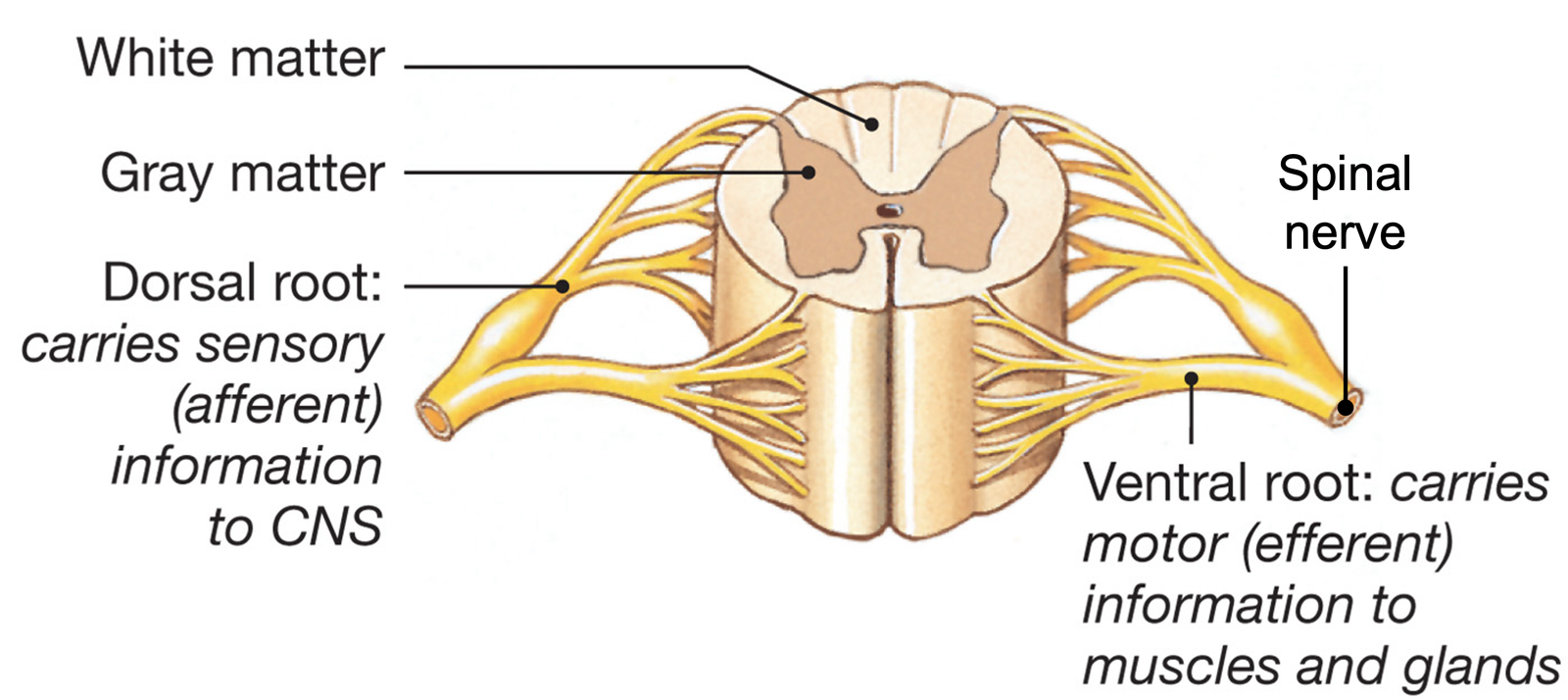
Spinal Cord Anatomy
The most critical detail about the spinal cord is that it is the body's information superhighway and reflex command center. It doesn't just passively pass signals along; it actively processes quick survival responses without waiting for the brain.
This thick bundle of nerve tissue is organized into a highly efficient layout:
The Outer Tracks (White Matter): Made of myelinated nerve fibers that act like high-speed cables, carrying sensory data up to the brain and motor commands down to the body.
The Butterfly Core (Gray Matter): The darker, center section shaped like a butterfly. It contains neuron cell bodies and handles local processing, which allows for instant spinal reflexes (like pulling your hand away from a hot stove before you even feel the pain).
The Armor: Because it is so fragile and vital, it is heavily protected by the bony vertebral column, three layers of membranes (meninges), and shock-absorbing cerebrospinal fluid.