
MKEB1053 Group Contribution — Endocrine System

UTM Malaysia assignment viewer · Interactive 3D anatomy model with contributor profile

Back to MKEB1053
Preparing 3D viewer...
Starting... 0%
Keep this page open while the model loads.

Endocrine System

The endocrine system is a network of glands that produce and release hormones to regulate growth, metabolism, reproduction, stress response, and overall body homeostasis. Major endocrine glands include the pituitary gland, thyroid gland, adrenal glands, pancreas, and pineal gland.

Endocrine System Main Model

Engineer notes
1 / 3
Engineer note image for Endocrine System

Overview of the Endocrine System

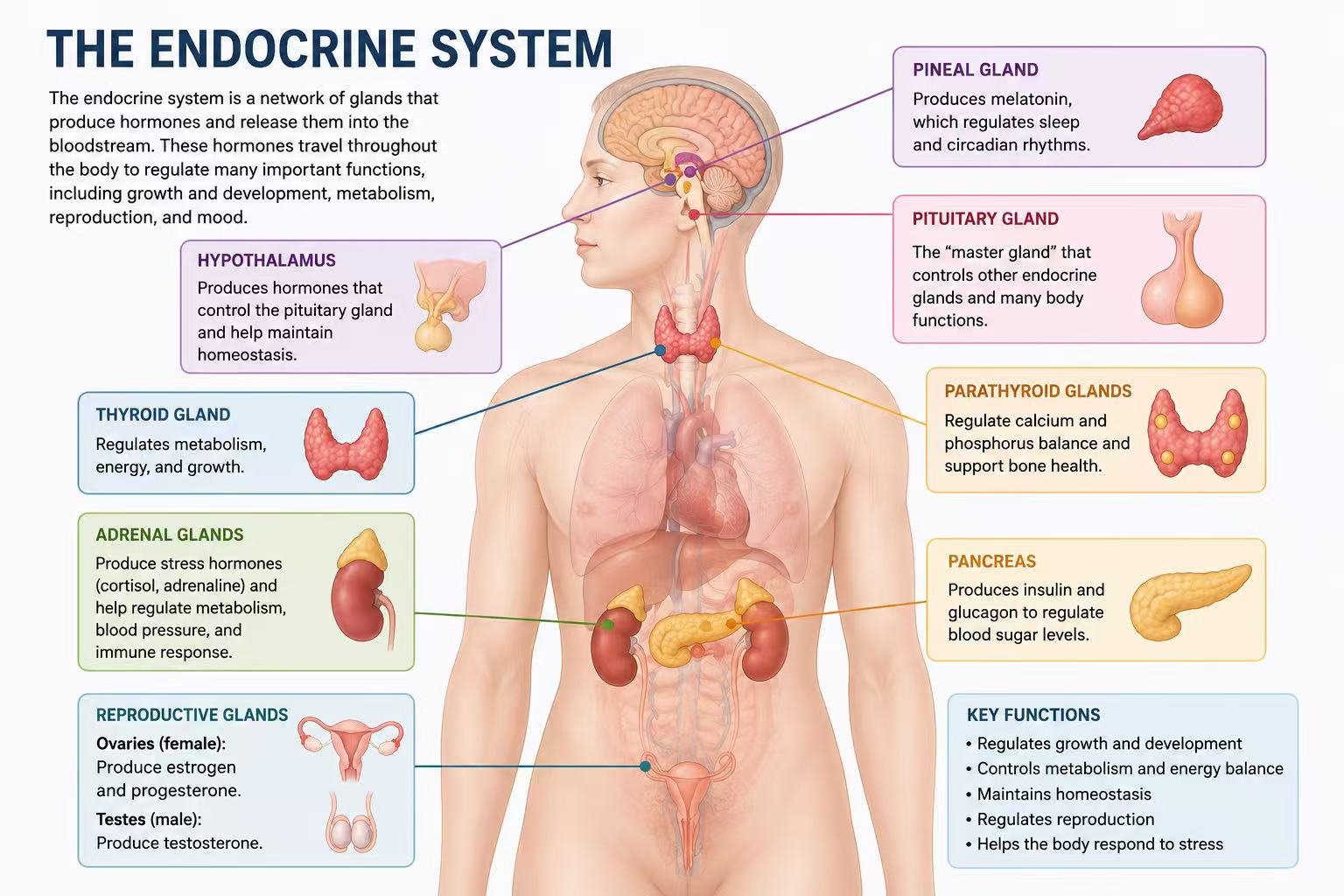
The endocrine system is a network of glands that produce and release hormones into the bloodstream. These hormones regulate growth, metabolism, reproduction, stress response, and homeostasis.

Key Endocrine Glands

* Pituitary gland – master gland controlling other endocrine glands.
* Thyroid gland – regulates metabolism and energy use.
* Parathyroid glands – maintain calcium balance.
* Adrenal glands – produce stress hormones such as cortisol and adrenaline.
* Pineal gland – secretes melatonin and regulates sleep cycles.

Clinical Importance
Hormonal imbalance may lead to disorders such as diabetes mellitus, hyperthyroidism, hypothyroidism, growth disorders, and adrenal diseases.

Learning Outcome
Students will be able to identify major endocrine glands and explain their functions in maintaining body homeostasis.
Engineer note image for Endocrine System

Hormonal Feedback Mechanism

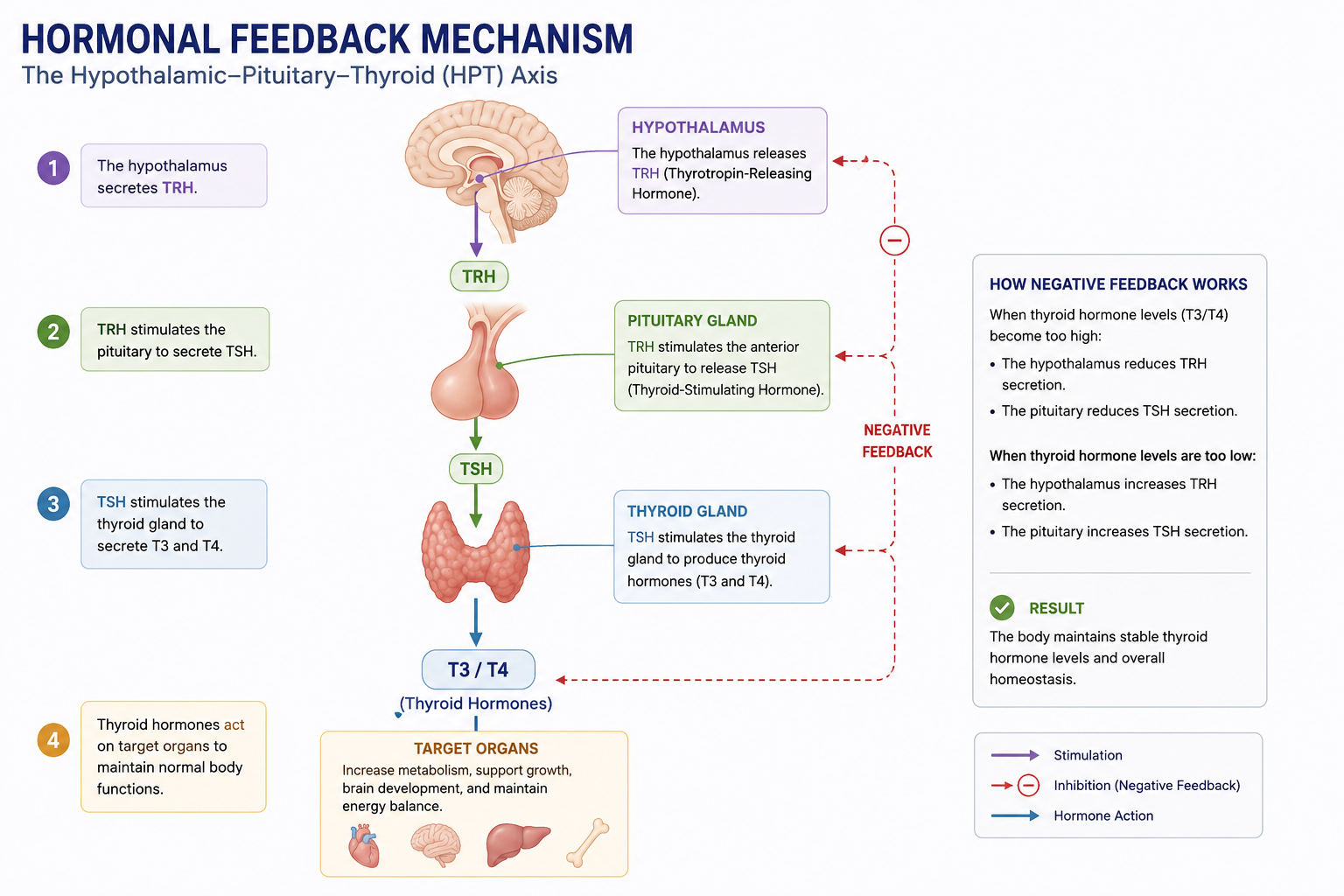
The endocrine system maintains body balance through feedback mechanisms. Negative feedback is the most common regulatory process. When hormone levels become too high, hormone production decreases. When hormone levels become too low, hormone secretion increases.

For example, the hypothalamus and pituitary gland regulate thyroid hormone production through the hypothalamic–pituitary–thyroid (HPT) axis. This feedback loop helps maintain normal metabolism, growth, and energy balance.

Understanding feedback mechanisms is essential for explaining how the endocrine system maintains homeostasis and responds to physiological changes.

Engineer note image for Endocrine System

Common Endocrine Disorders

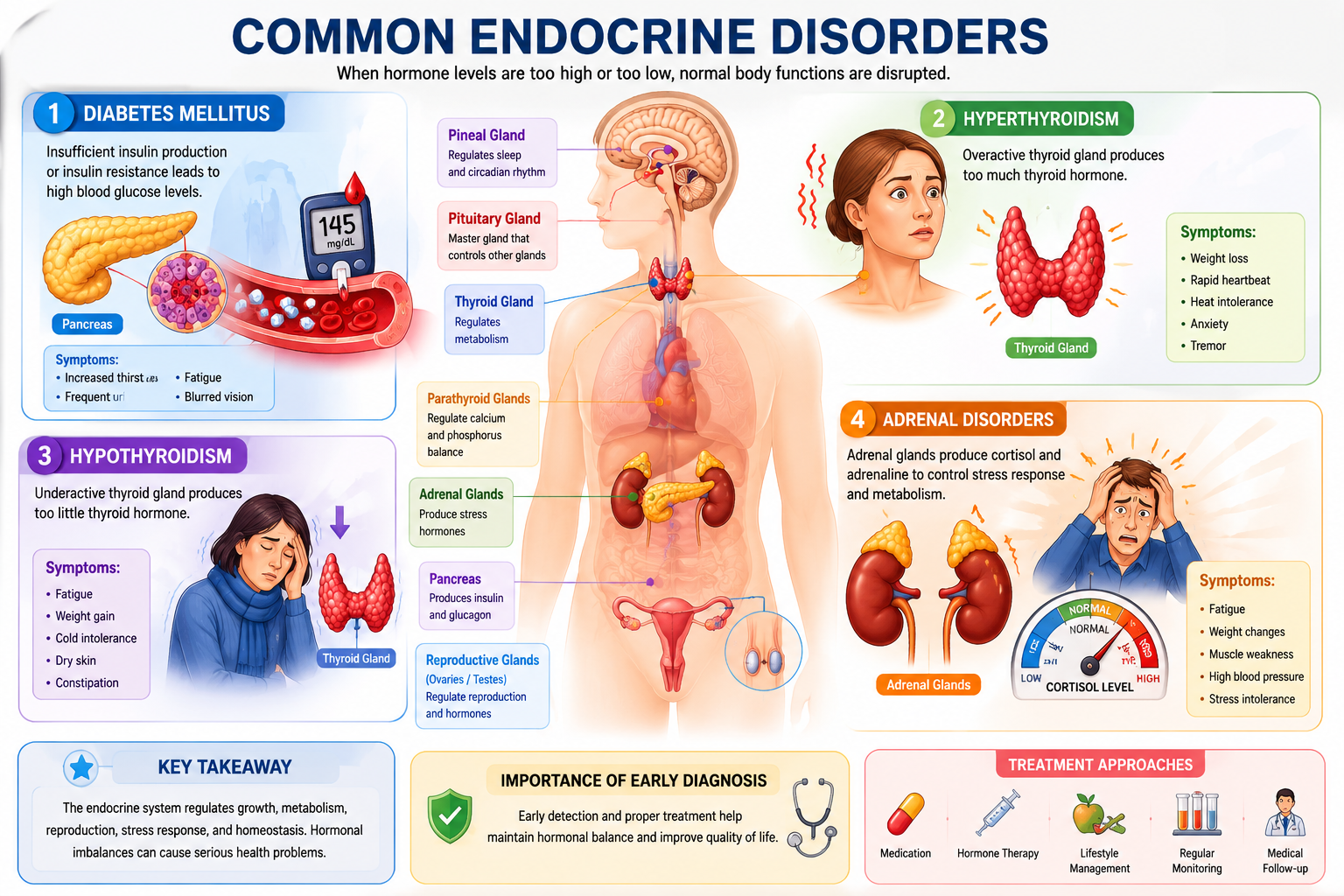
Endocrine disorders occur when glands produce too much or too little hormone. These conditions can affect growth, metabolism, reproduction, and overall health.

Common endocrine disorders include:

• Diabetes Mellitus – caused by insufficient insulin production or insulin resistance.

• Hyperthyroidism – excessive thyroid hormone production leading to increased metabolism.

• Hypothyroidism – reduced thyroid hormone production causing fatigue and weight gain.

• Adrenal Disorders – abnormalities in cortisol production that affect stress response and metabolism.

Early diagnosis and proper hormone regulation are important for maintaining normal physiological function and improving patient outcomes.