
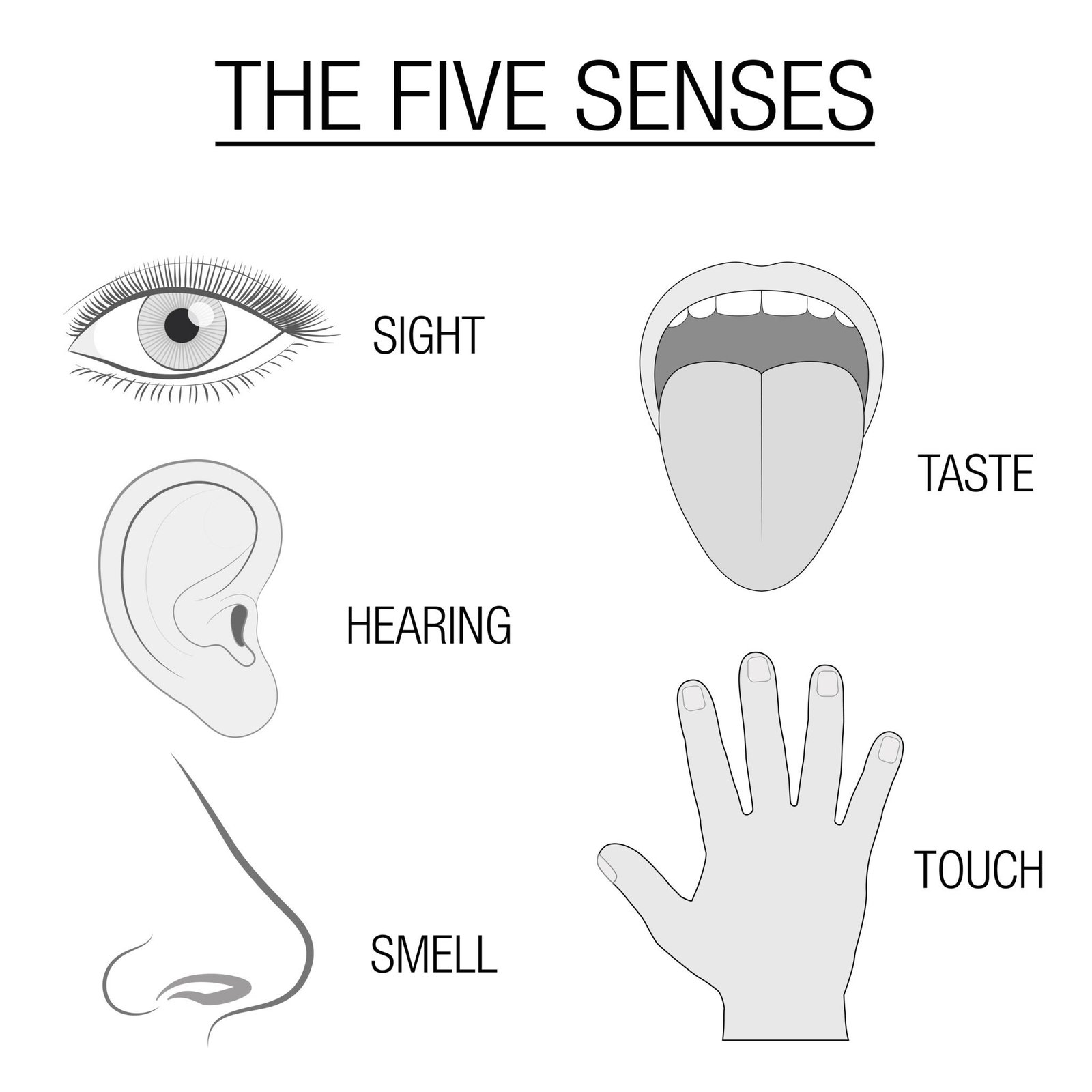
Core Translation Centres
The most critical detail about the special senses is that they are highly localized, specialized translation centers. Unlike general senses (like touch or temperature, which are felt all over your skin), each special sense relies on complex, dedicated organs packed with unique photoreceptors, mechanoreceptors, or chemoreceptors to translate physical energy into neural signals.
Here is how these specialized translation centers process your world:
Vision (Eyes): Photoreceptors (rods and cones) in your retina capture light waves and convert them into electrical signals, which the brain turns into shapes, colors, and motion.
Hearing & Balance (Ears): Mechanoreceptors handle two jobs at once. Sound waves vibrate fluid within the inner ear's cochlea to create hearing. Meanwhile, fluid movement inside the fluid-filled semicircular canals tracks the precise tilt and motion of your head to maintain balance (equilibrium).
Smell & Taste (Nose & Tongue): These are your chemical sensors. Chemoreceptors in your nasal cavity bind to airborne molecules, while taste buds on your tongue bind to dissolved compounds (sweet, salty, sour, bitter, and umami). They work closely together to create what you perceive as flavor.