MKEB1053 Group Contribution — Gastrointestinal Tract

UTM Malaysia assignment viewer · Interactive 3D anatomy model with contributor profile

Back to MKEB1053
Preparing 3D viewer...
Starting... 0%
Keep this page open while the model loads.

Gastrointestinal Tract

This learning module introduces the gastrointestinal tract (GIT) and demonstrates how food is processed as it travels through the digestive system. Learners will explore the major digestive organs, including the mouth, oesophagus, stomach, small intestine, large intestine, liver, gallbladder, and pancreas. Through interactive visualisation and guided explanations, students will understand the processes of mechanical digestion, chemical digestion, nutrient absorption, and waste formation. The module aims to help learners connect the structure and function of each digestive organ within the overall digestive process.

Gastrointestinal Tract Main Model

Engineer notes
1 / 4
Engineer note image for Gastrointestinal Tract

Your GI Track

The most critical detail about the gastrointestinal (GI) tract is that it acts as a continuous, specialized assembly line designed to break down food, absorb life-sustaining nutrients, and expel waste.

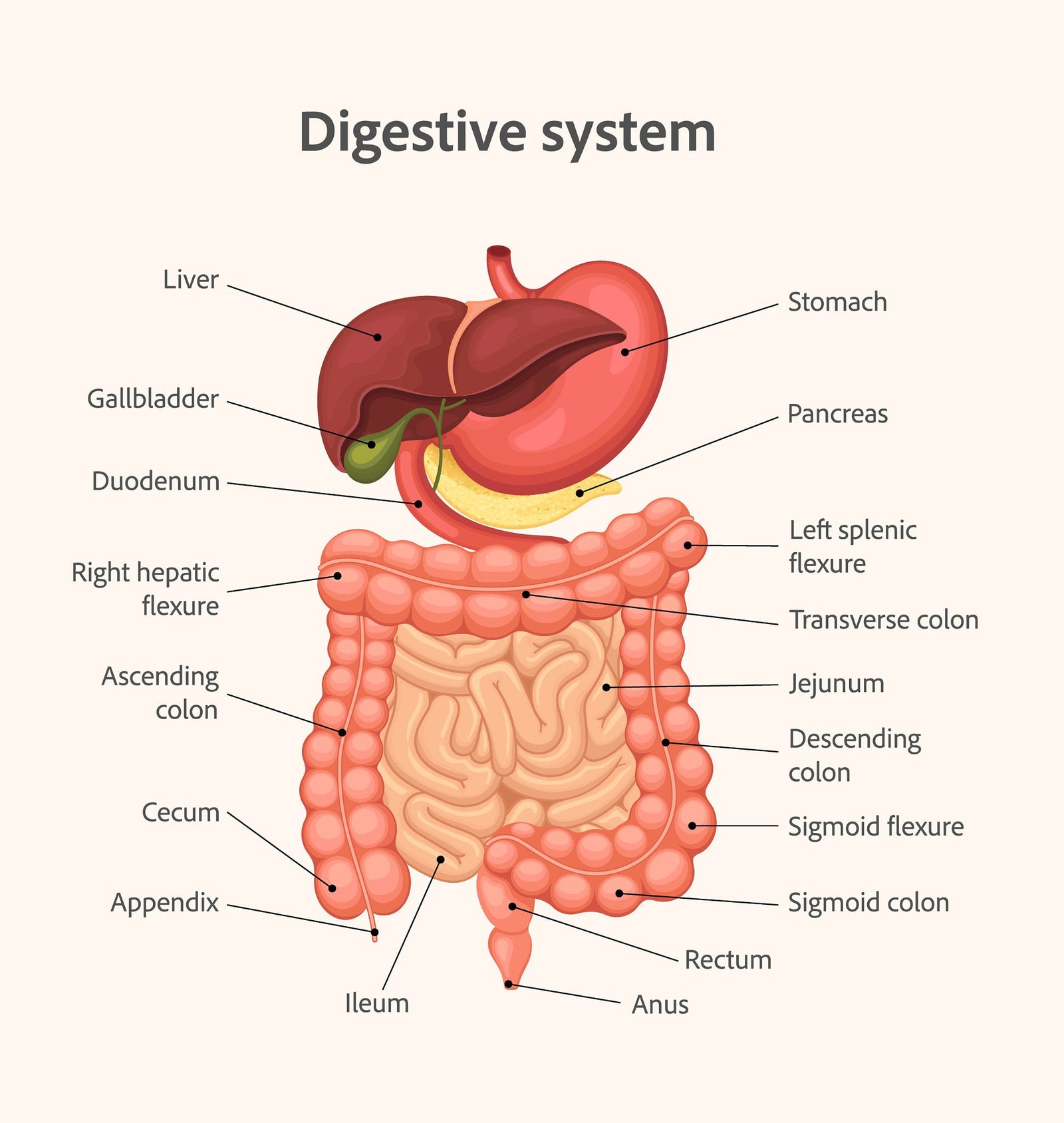
The process relies on distinct zones, each fulfilling a specific mechanical or chemical role:

The Upper Tract (Esophagus & Stomach): Food is mixed with powerful gastric juices in the stomach to liquefy it into a mixture called chyme.

The Absorption Engine (Small Intestine): Composed of the duodenum, jejunum, and ileum, this is where the vast majority of chemical digestion and nutrient absorption happens, aided by enzymes from the pancreas and bile from the liver and gallbladder.

The Finisher (Large Intestine/Colon): This section reabsorbs water and salts from remaining material, processing it through the cecum and colon segments (ascending, transverse, descending, and sigmoid) until it is stored in the rectum and expelled.

GI Tract Overview

The gastrointestinal tract functions as a continuous processing system. Food enters through the mouth, travels through the oesophagus, undergoes digestion in the stomach, and is further processed in the intestines. Each organ performs a specialised role that contributes to nutrient extraction and waste elimination.

The small intestine is the primary site of nutrient absorption. Its inner surface contains villi and microvilli that greatly increase surface area, allowing nutrients to enter the bloodstream efficiently.

The liver, gallbladder, and pancreas support digestion by producing bile and digestive enzymes. Although food does not pass directly through these organs, they play essential roles in breaking down nutrients.